
Permanent marks. No ink, no contact, no consumables.
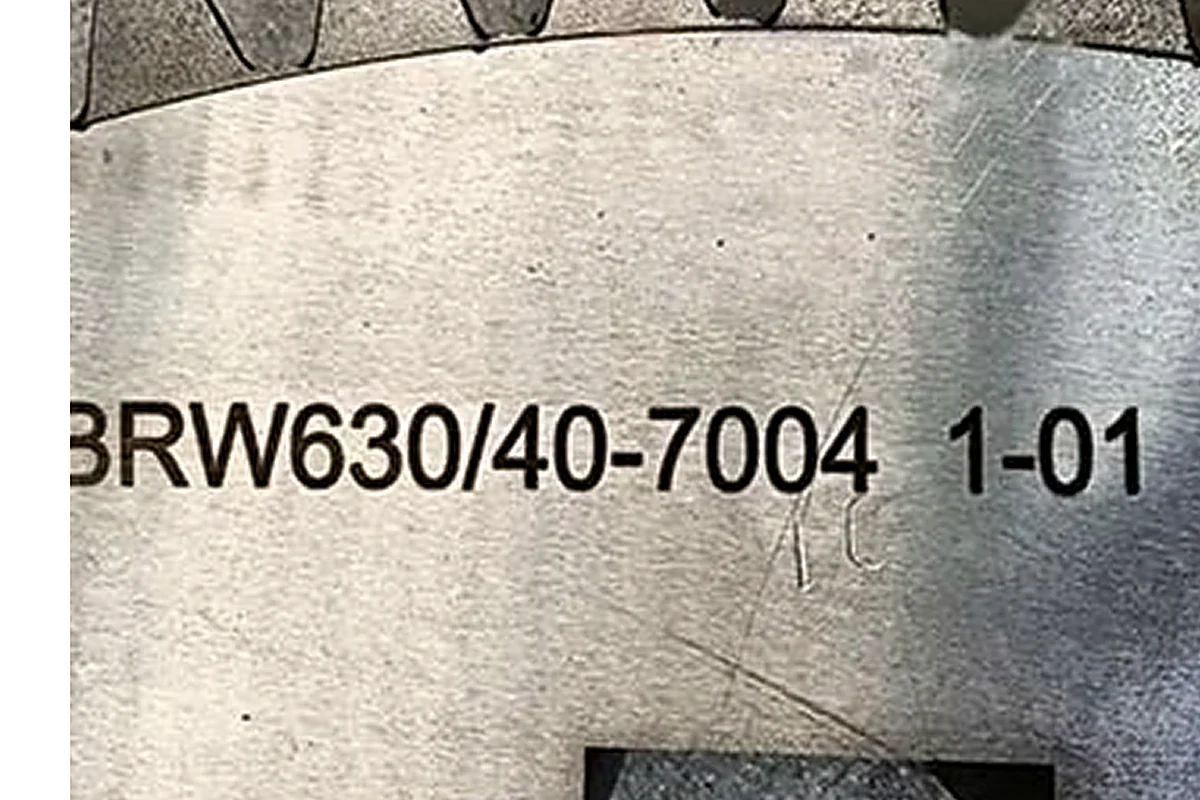
Mark serial numbers, barcodes, logos and traceability codes directly onto the part surface. Our fiber, UV, CO₂ and MOPA sources cover metals, plastics, glass and coated materials, from a portable desktop unit to an integrated production cell.
Model-level parameters
Fiber Laser Marking
Metals, high-hardness and brittle materials.
| Laser power | 10 / 20 / 30 / 50 W |
|---|---|
| Repetition frequency | 20–80 kHz |
| Marking area | 100×100 / 150×150 / 200×200 mm |
| Marking speed | ≤7,000 mm/s |
| Power supply | 220 V / 50 Hz / 5 A |
| Dimensions (L×W×H) | 780×600×1680 mm |
UV Laser Marking
Cold processing for plastics, glass and flexible materials.
| Laser power | 3 / 5 W |
|---|---|
| Repetition frequency | 10–150 kHz |
| Wavelength | 355 nm |
| Cooling | Water-cooled |
| Marking speed | <10,000 mm/s |
| Dimensions (L×W×H) | 780×600×1680 mm |
CO₂ Laser Marking
Non-metals: wood, leather, paper, acrylic, packaging.
| Laser power | 20 / 30 / 100 W |
|---|---|
| Repetition frequency | 20–25 kHz |
| Marking area | 70×70 / 110×110 / 175×175 mm |
| Marking speed | ≤7,000 mm/s |
| Min. character | 0.4 mm |
| Power supply | 220 V / 50 Hz / 5 A |
A MOPA variant (colour marking on stainless steel) and a lightweight portable desktop unit are also part of the marking family. Configuration options include rotary fixtures, vision positioning and fly-marking for the production line.
Send your job. We’ll match the machine.
For a fast, accurate quote on laser marking machines, tell us your material, thickness or part size and how many you run. English-speaking sales for Europe, North America and Australia.